
AMSynchro · Material traceability software
Your powder records, in one platform.
AMSynchro is THINKITTECH’s software for metal powder traceability in additive manufacturing. It brings material specifications, laboratory results, powder operations and transport condition monitoring into one platform.
Platform features
Manage the powder records behind your production.
Use AMSynchro to manage metal powder data and operations, from material specifications to conditions recorded during transport. These functions are available today, with full platform access for evaluation.
- Material specifications
- Keep material specifications together so your team can refer to the requirements for the powder it handles.
- Material characterisation and laboratory results
- Manage material characterisation and laboratory results alongside the powder records your team reviews.
- Printing, sieving and blending operations
- Record printing, sieving and blending operations as part of your powder management workflow.
- Inventory management
- Manage powder inventory alongside the material records and operations used by your team.
- Device and machine management
- Manage the devices and machines involved in your workflow alongside your material and operation records.
- In-transit condition monitoring
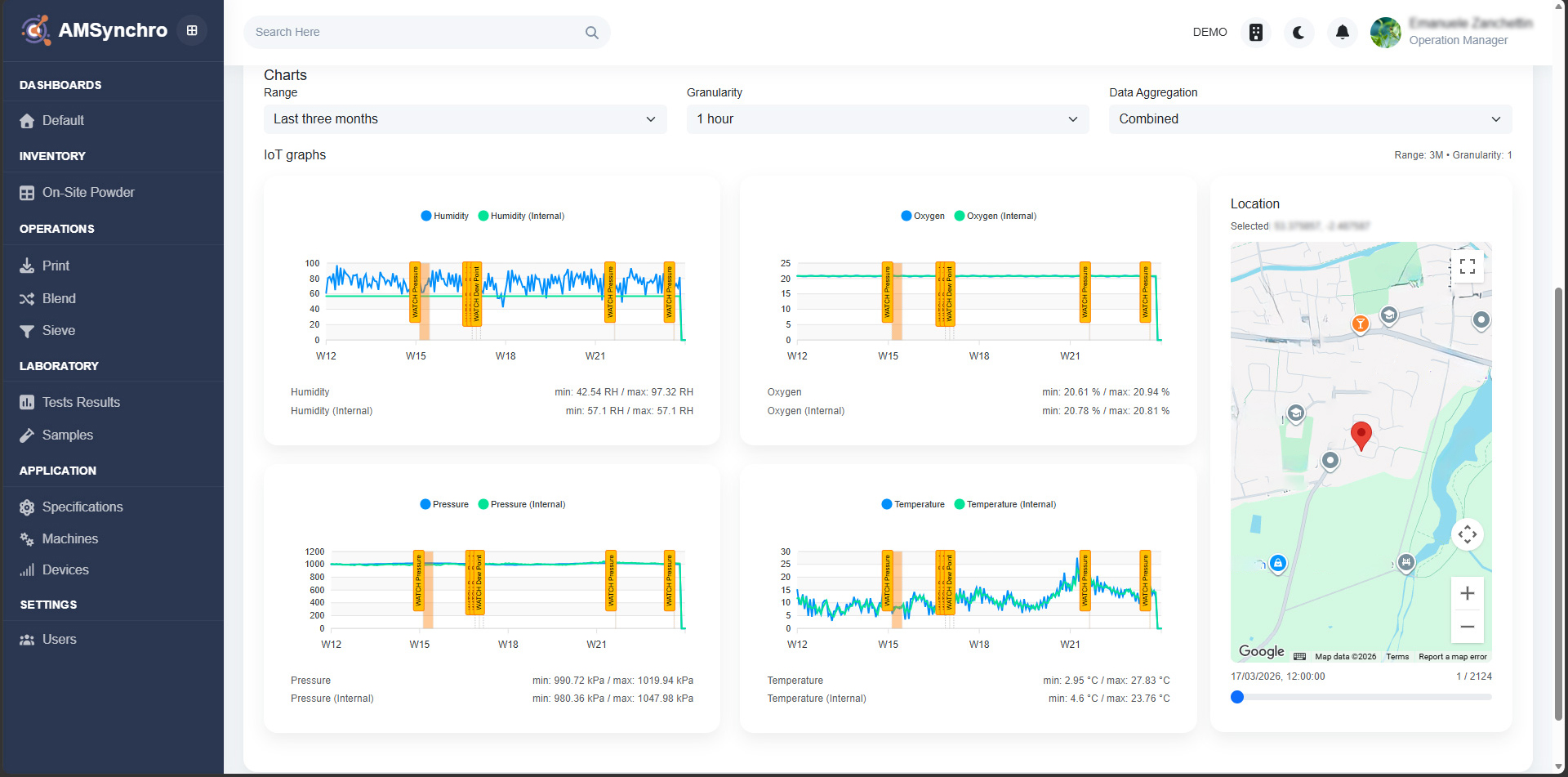
- Review humidity, oxygen, pressure and temperature recorded during transport, with internal and external readings, event markers and a location map.
A look inside AMSynchro
Powder genealogy and transport conditions.
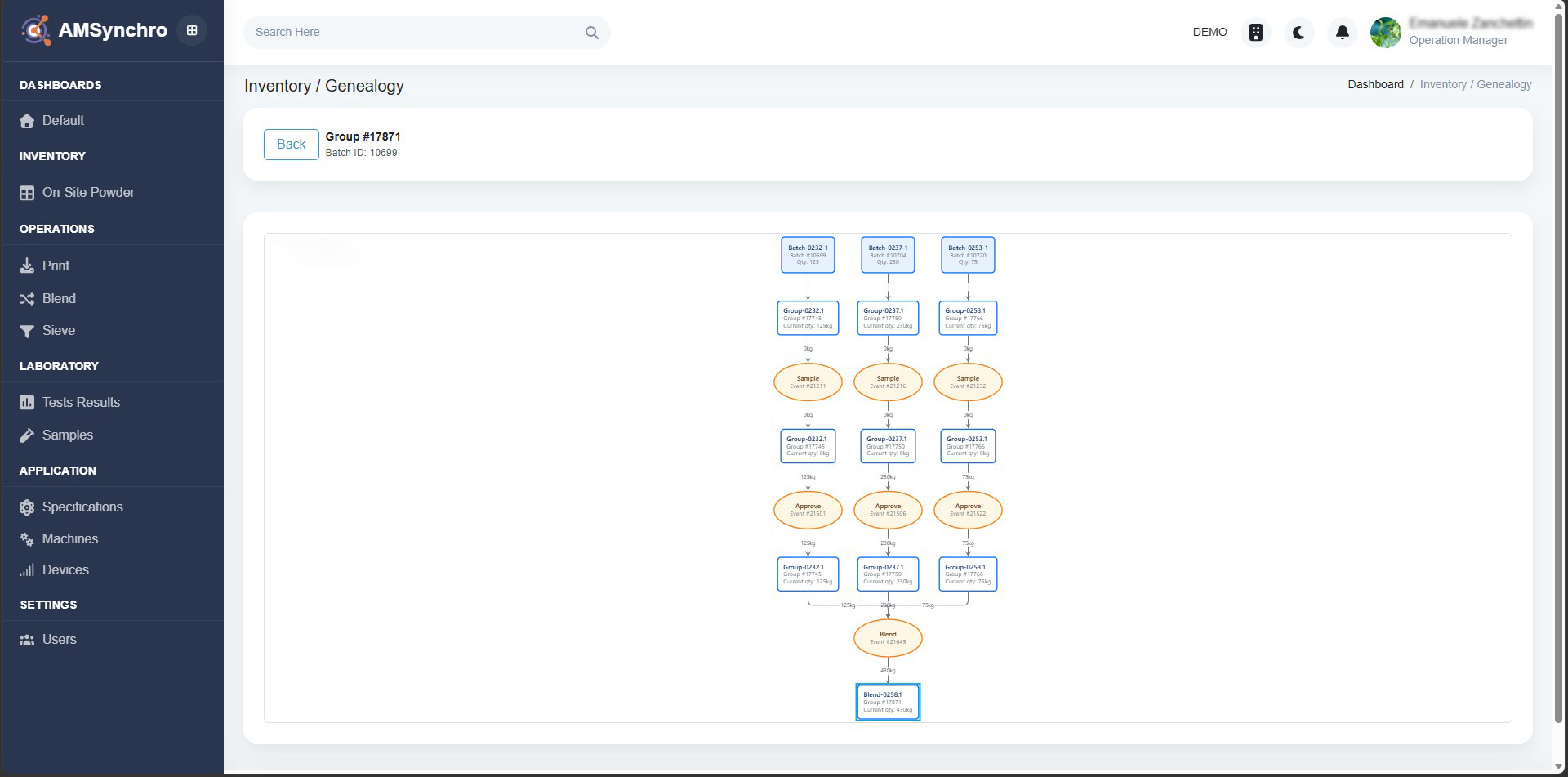
Trace the source batches behind a blend, then take a closer look at the condition monitoring dashboard. Open either image to inspect the details.
 View image
From source batches to a blend
Source batches remain linked to the resulting blend.
- Each source batch starts with its own material record at the top of the diagram.
- Arrows connect the batches to sample and approval events.
- The paths converge at the blend, so you can trace the resulting material back to its sources.
 View image
Conditions recorded during transport
Sensor readings, event markers and a location map in AMSynchro.
- Compare humidity, oxygen, pressure and temperature readings over the selected period.
- Use the event markers to find the readings around a particular moment.
- Check the map for the location associated with the selected time.
In development
Connect the material journey
to the finished part.
Our next development steps extend these records across the manufacturing process. The aim is a digital thread: a connected history from source material through production, inspection and reuse.
- End-to-end traceability
- Follow the chain of custody using supplier, batch, container and part identifiers, with the records behind each handover.
- Material genealogy
- Preserve the relationships between source batches and later blends, splits, reuse cycles and print jobs.
- Monitoring linked to material history
- Relate container and site measurements to the material being handled and the operations that follow.
- Production and quality records
- Bring build records, laboratory results, inspections and nonconformances into the material history for qualification and audit work.
- Earlier identification of quality risks
- Use material history and sensor data to help identify potential risks and prioritise the checks that follow.
- A record of the decision
- Keep the review outcome, supporting records, responsible person and follow-up actions together.
Containers, sensors and locations
Give each reading a place in the material story.
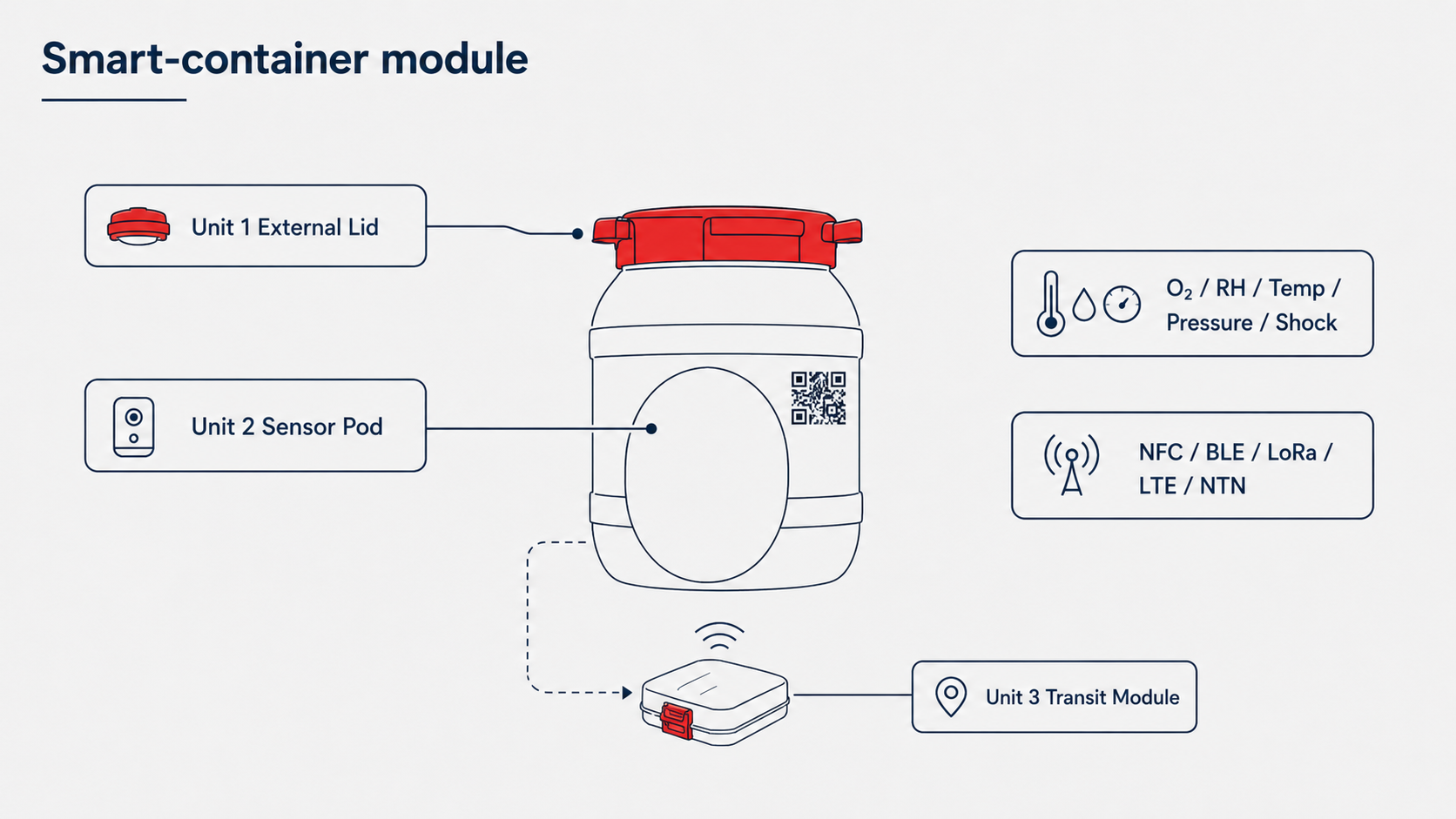
A sensor reading is more useful when you know where it came from. Our approach brings container identity, location and handling events into the development of the digital thread.
Connected containers
Connect the container’s identity and sensor measurements with the powder it holds and the events in its handling history.
Storage and production locations
Relate movements and readings to the places where material is stored, handled and used, including transfers between teams or sites.
 View image
The digital thread
From source material to quality review.
Materials & suppliers
Source batches, supplier declarations and material documents
Containers & locations
Sensor readings, handling events and movements
Production & parts
Powder use, build records and part identity
Quality & decisions
Inspection results, review outcomes and follow-up actions
Traceability · Genealogy · Telemetry
Fit the platform to your process.
Start with a task your team already performs, such as reviewing a powder batch or recording a blending operation. We’ll look at the data you use, where it is held and how you identify materials and operations.
From there, we can plan the connections to your existing systems and identify any integration or development work.
Plan an evaluation
Choose the records and operations you want to examine, the people involved and the results you need to review.
We agree the timetable, support and commercial arrangements before the evaluation begins.
Talk to the team
See how AMSynchro could work for your team.
Tell us about the material records you manage and the problem you want to solve. We’ll help you identify a useful starting point.